- 00:00 FSM Changes Lives Fast
- 00:53 Podcast Intro And Hosts
- 02:16 The Magic Of Treatment
- 04:26 Quick Wins In Clinic
- 08:16 Progressive Disease Reality
- 11:43 Treat The Whole Person
- 18:17 Proof And Published Data
- 21:12 How People Find FSM
- 21:57 Why FSM Is Not TENS
- 25:33 The Book Origin Story
- 28:31 Writing Under Pressure
- 31:34 Prologue Inspiration
- 33:21 Sound of Courage
- 35:12 Energy and Next Steps
- 38:47 Page Turner Writing
- 40:18 Curiosity in Practice
- 42:06 Challenging Hopeless Diagnoses
- 45:50 ED Knee Breakthrough
- 49:06 Learning by Doing
- 50:23 Snoopy Side Quest
- 51:06 Conference and Wrap Up
In contemporary medical practice, it’s vital for practitioners to stay open to emerging therapies that offer new dimensions of healing, especially for cases deemed resistant or complex. Frequency Specific Microcurrent (FSM) is one such tool that is reshaping treatment paradigms through a nuanced understanding of energy, tissue regeneration, and integrated care.
Embracing Change: Avoiding the Routine
For medical professionals, it is not just about the basics of diagnosis and medication. The key lies in understanding whether your approach is injecting energy into both your practice and your patients, or merely echoing mundane outcomes. At the core of every treatment decision should be the consideration, “Does this give you energy, or does this drain your energy?” This grounds practitioners in ensuring that their methods are invigorating rather than depleting—for both themselves and their patients.
The Power of Small Changes in Patient Outcomes
FSM allows for significant life changes in a short span, effectively targeting inflammatory cytokines and alleviating nerve pain. Its transformative potential extends to treating conditions previously thought unmanageable. The ability to slow the progression of degenerative diseases such as ALS, MS, and Parkinson’s has offered hope where little existed.
Practitioners report significant improvements not just in day-to-day pain management but in enhancing a patient’s quality of life. This is especially resonant in conditions like fibromyalgia and post-stroke recovery, where FSM can tap into the body’s self-restorative capabilities, mediated strongly by the vagus nerve.
The Multipronged Approach to Complex Conditions
FSM challenges the notion of singular causality in ailments like concussion or Ehlers-Danlos syndrome. Often, the underlying issues necessitate a holistic approach, looking beyond the immediate manifestations to uncover deeper physiological and energetic blockages. It demands that practitioners treat the whole person, redefining the idea of intervention from acute response to integrated healing.
In medical practice, even acknowledging a patient’s background—be they a former athlete or someone with a chronic health condition—can illuminate pathways for unique interventions. Understanding the person, not just the disease, helps practitioners target the treatment more effectively.
Learning and Adaptation
The inherent beauty of this therapy lies in its dynamic nature, inviting practitioners to learn something new with each patient interaction. Every case is an opportunity to apply innovative thinking, continually questioning and challenging what medical norms have set as incurable. Sitting with the discomfort of not having all the answers and having the courage to keep questioning are essential traits for practitioners aiming to break new ground.
Unlocking the power of FSM is not merely about applying the technology but understanding its broader implications for medical practice, offering a kind of salvation to those whose ailments have left them with little hope.
Questions answered in this episode
Can FSM help with progressive conditions like Parkinson's, MS or ALS?
Dr. McMakin says that with MS, ALS and Parkinson's, sooner is better: getting patients early extends the progression much longer, and 'slowing progression is progress.' She also notes you can't put tissue back that's not there.
Why would an FSM practitioner treat the vagus nerve after a stroke?
Dr. McMakin explains that she doesn't have a frequency for every part of the brain, so she treats the vagus nerve, which increases brain-derived nerve growth factor, reduces glutamate and reduces inflammation, and lets the vagus help repair the stroke.
What research data supports FSM?
Dr. McMakin says FSM has data showing inflammatory cytokines reduced 10 to 20 times in 90 minutes, blinded animal research on inflammation, and vagal tone increased about three times in 15 minutes in strong responders. She notes this data came from work in Australia, NIH and the Feinstein Institute.
How is FSM different from a TENS unit?
Dr. McMakin explains that FSM devices are approved in the TENS category and no claims can be made beyond that, but TENS machines only temporarily block pain. Kim describes TENS as creating a lot of noise in the tissue, with high amperage decreasing ATP, while FSM is the opposite.
How did Dr. McMakin come to write The Resonance Effect?
An editor at North Atlantic Books whose Crohn's disease went into remission with an FSM practitioner asked her why she didn't have a book. She wrote most of the chapters in about seven days at a cabin above Fort Collins, borrowing Dick Francis's technique for ending chapters so readers turn the page.
How was a hypermobile (Ehlers-Danlos) patient's knee hyperextension treated with FSM?
Dr. McMakin describes a patient whose knee kept locking back to about minus 12 degrees. Using one machine for the round tendon and hamstrings and a second for the sensory and motor cortex, the patient got up from the table at about minus three; Kim credits running the two machines together.
Have a question for Dr. McMakin and Kim?
Send it in and it may be answered on a future episode.
204 The Magic of FSM: Rapid Change, Courage, and Treating the Whole Person
[00:00:00] Kim Pittis: There, there is something very special that happens during an FSM treatment that is very hard to put into words.
[00:00:05] Dr. Carol: we’re in a position of changing somebody’s life in a very short period of time.
[00:00:13] Reduce inflammatory cytokines by, 10 to 20 times in 90 minutes. We have data,
[00:00:20] What is the sound of courage? It’s not a coincidence that every army in history has drums.
[00:00:29] Kim Pittis: Yeah.
[00:00:31] Dr. Carol: And that is the sound of courage in your bones.
[00:00:36] Kim Pittis: I coach some of the most successful business people in North America, and it comes down to one very basic question, whether it’s a hundred dollars venture or a hundred million dollar venture, does this give you energy or does this drain your energy
[00:00:53] Kevin: thank you for subscribing to the Frequency Specific Microcurrent podcast. FSM is a breakthrough tool for medical practitioners who feel stuck with limited treatment options, especially for complex issues unresponsive to conventional care. FSM training is the best continuing education course for medical practitioners.
[00:01:08] Get our free introductory webinar at frequencyspecific.com/about or find FSM trained practitioners at frequencyspecific.com/find. Here’s Dr. Carol & Kim Pittis.
[00:01:19] Dr. Carol: There you go.
[00:01:20] Kim Pittis: We do. And it is always so funny ’cause once a year, I wish it was more often that we get to do it in person because it is so much fun.
[00:01:28] Dr. Carol: So much fun.
[00:01:30] Kim Pittis: And do you feel like we’re like talk show hosts, especially last year or this past advance? We had so many people join us for the podcast live and I thought that was just, I don’t know who had more fun, them or us, but
[00:01:43] Dr. Carol: it was pretty much the same number of people that are usually with us live.
[00:01:48] Were with us in person, plus the people that were with us live.
[00:01:54] Kim Pittis: Yeah. So we always have so much to talk about. I had to think about something from the advanced Monday and Tuesday in the clinic. And at the advance, and you and I just talked about it briefly the other day on the phone.
[00:02:08] You still didn’t get through all the slides that you wanted to. And that’s just what happens when you lecture live. It takes on a pathway similarly to our podcast. However at the advance you had shown the slides what I didn’t tell you, and that was the I guess the sub theme or the sub presentation of the advanced.
[00:02:27] And for the people that are listening, lay people. Non FSM practitioners something very and I’m not sure what the word is, magical. Intimate. You had some very good adjectives that describe an FSM, what I call relationship because treatment almost seems too clinical and. There, there is something very special that happens during an FSM treatment that is very hard to put into words.
[00:02:56] However, you did a very good job putting it into words and it was very nice to bring or for people who have had little to no f FSM exposure. To have them listen to that part of the presentation, I think was very special. And I’ve had patients that I’ve worked with for years and this past Monday and Tuesday, there, there were some very difficult cases that just weighed on my heart.
[00:03:25] And you leave the treatment and you leave the clinic and you’re driving home and they occupy a space in your heart, unlike any other profession, I think.
[00:03:37] Dr. Carol: Yeah, it’s true. It, I think it’s because we tend to see, I would say the worst of the worst. A lot of times FSM practitioners are the court of last resort.
[00:03:52] Kim Pittis: Yeah.
[00:03:53] Dr. Carol: And we, I, you just don’t get to vote. And if you can help them. Then it is magical. And most of the time it’s something simple, right? Like thalamic stroke or phantom limb pain or nerve pain, or I don’t know abdominal adhesions or so as trigger points, or, stuff that for us is easy,
[00:04:25] Kim Pittis: right?
[00:04:26] Dr. Carol: So today I treated somebody. Who had described a fall, she had down the stairs when she was a teenager and she landed on her tailbone and it’s so I had done the supine cervical practicum on her and then she told the story of this slide down the stairs and landing on her tailbone. And it’s that sounds like dural adhesions to me.
[00:04:56] So I took her one of her legs and brought it up and it had a hard stop at 90 degrees, and it’s okay. So I took the wet towel off her chest and I wrapped it around her foot and did scarring in the dura and just did this and that and move the dura and the pelvis and then switch legs and move the other one.
[00:05:23] And then. Both knees, basically, one at a time went clear to her chest and it was like, they how did you, what did you do? And it’s it’s just scarring on the door. It’s not that hard. And it, so we’re in a position of changing somebody’s life in a very short period of time. And it requires an adjustment for both of us.
[00:05:55] ’cause for us, it’s like it’s just scarring in the dura. Yeah. And for the patient is, oh my God, it’s been 40 years since I’ve been able to do that.
[00:06:04] Kim Pittis: And those big changes were one of the reasons why I really wish rock tape could have come to the course, but they were so generous to give our practitioners codes for training and discounts and all the other things.
[00:06:15] Because we create. So much changed so quickly that the more you practice with it, especially if you’re like me and once you take the training, you can’t not practice with it. I have a, I don’t know how the practitioners do it, who take the training and they have it, and yeah, sometimes they use FSM in a treatment and I’m like, why outta cur not to be bratty, but like, why would you ever not.
[00:06:42] Want to use it Just being, curious because I am at the point where I won’t treat without it. I don’t wanna lay my hands on anybody unless I can use FSM.
[00:06:55] Dr. Carol: I don’t know how to, so how
[00:06:58] Kim Pittis: to treat without it.
[00:06:59] Dr. Carol: Somebody else came in today where I am and. He said I have this knot in between my shoulder blades, just on the right.
[00:07:07] It’s so what do you do? He said on the weekends I drive race cars. Aha. Have you ever crashed? And he looked at me like I was from Mars. And he said yeah, once or twice. Okay. And then I went, does this hurt? Ow. Okay, so lay down. And it’s just, it’s not that hard. So I just ran 1 24 and seven 10 for the non FSM people that’s just torn and broken in the disc annulus.
[00:07:40] And that knot in the middle of his back and this sore spot in front are connected because they’re all the disc annulus,
[00:07:48] Kevin: right?
[00:07:48] Dr. Carol: So the problem with the disc annulus is that it has an owie and has a little crack in it, and that’s what 1 24 fixes.
[00:08:01] Kim Pittis: I
[00:08:01] Dr. Carol: ran it for about 10 or 15 minutes. This was no longer sore.
[00:08:07] He stood up and he went, oh that thing, and my back is gone. Sure.
[00:08:12] Kim Pittis: Yeah.
[00:08:12] Dr. Carol: And yeah. Those are the ones that you can fix that are easy. And then there are the ones where you, this is a maintenance problem and this is how we’re going to maintain it.
[00:08:27] Kim Pittis: When it comes to conditions like a LS ms, Parkinson’s the cases that break your heart that you wish you could do more, I have to stop myself sometimes and think, yes, this is still progressing.
[00:08:43] But I wonder how fast it would’ve progressed without treatment or I wonder, so there there’s things that I wanna add to the, what I didn’t tell you because and it’s not the, you want it more than the patient. It I do believe that a lot of these people that I’ve been working with is a team effort.
[00:09:01] We, we both want the same things.
[00:09:03] Dr. Carol: Okay.
[00:09:04] Kim Pittis: But it is knowing, if you were up against a progressive disease it is a progressive disease and the maintenance, maybe it’s not maintenance at that point. Maybe it’s
[00:09:15] Dr. Carol: slowing. Progression is progress. Slowing progression?
[00:09:19] Kim Pittis: Progression is progress,
[00:09:22] Dr. Carol: slowing progression.
[00:09:23] So with. Early stage Parkinson’s. So sooner is better in MS A LS and Parkinson’s.
[00:09:32] Kim Pittis: Yeah.
[00:09:32] Dr. Carol: You get them early.
[00:09:34] Kim Pittis: Yeah.
[00:09:34] Dr. Carol: Then it’s, it just extends the progression much longer.
[00:09:42] Kim Pittis: Yeah.
[00:09:42] Dr. Carol: And so we have had, I’ve had early stage Parkinson’s patients, George for one.
[00:09:51] Kim Pittis: Yeah.
[00:09:51] Dr. Carol: FSF. FSM dopamine precursors and mitochondrial support,
[00:10:00] Kim Pittis: right
[00:10:00] Dr. Carol: to repair the parts of the brain.
[00:10:03] Kim Pittis: A
[00:10:03] Dr. Carol: LS Sandra has presented two cases. She hasn’t published any of them ’cause who wants to hear that a LS can be helped? But she’s presented two cases of a LS that actually regressed.
[00:10:20] Kim Pittis: Wow.
[00:10:21] Dr. Carol: Early stage ms. We’ve reversed late stage MS. Can’t put tissue back. That’s not there.
[00:10:29] And stroke patients, sensory motor strokes so far.
[00:10:36] Knock on something pretty easy to get the spasticity gone.
[00:10:43] Kim Pittis: Right.
[00:10:43] Dr. Carol: Strokes in other parts of the brain.
[00:10:46] What I told one patient was, I’ll treat the brain part, but I don’t have a frequency for that specific brain part.
[00:10:55] But if you treat the vagus, the bra vagus increases brain derived nerve growth factor.
[00:11:03] So what we’re gonna do is treat your vagus. Every single night and every single day, and let your vagus repair your stroke. Now, she doesn’t have any symptoms from any of the strokes that she’s had.
[00:11:20] And she’s had mild ones, but some weird visual residuals.
[00:11:27] Kim Pittis: Residuals.
[00:11:27] Dr. Carol: But I’ll let the vagus fix it.
[00:11:29] I can’t fix it. I don’t have a frequency for that brain part that works.
[00:11:33] Kim Pittis: Right.
[00:11:34] Dr. Carol: The vagus increases, brain derived nerve growth factor, reduces glutamate, reduces inflammation,
[00:11:42] Kim Pittis: right?
[00:11:43] Dr. Carol: Yeah, and the, what I can’t teach you is more about the emotional, ugh. Stuff,
[00:11:57] Kim Pittis: yeah.
[00:11:58] Dr. Carol: Is going to hit you at some point,
[00:12:01] Kim Pittis: right.
[00:12:01] And it’s like that rollercoaster where there’s days where it hits you, and then there’s days that you’re on top of the world and you’re flying high. And then there’s days that it’s like the universe tells all these people to jump on a bus and come to your clinic the same week, just when you start getting cocky.
[00:12:18] Exactly. Just to keep you humble. And I think it also helps you go laterally with your thinking. If you would’ve told me, 10 years ago that these, I would be treating these people, I would say I do sports. No, I do sports. However the people that I am seeing in Ms A LS Parkinson’s at later stages were once an athlete.
[00:12:47] And so I can still talk to them like the soccer player the track athlete, the gymnast that they were, and I am finding, I’m grateful for my sports background, so I can say, okay, I want you to pretend to. Kick a ball, show me your stance when you would go into your pyramid or something and you can see the joy, you can see the memory of that movement, and, I feel that has helped. That is a helpful treatment in my case to help connect and yes, you can’t put tissue back that’s not there. But it’s also shown me how to think differently about movement, how to think differently about tissue, especially again, I’ll say it, keep saying it, it’s the first core, two hours in.
[00:13:37] Sitting there in, in Austin, Texas, and you’re like it’s never the muscle
[00:13:45] and my heart just stink. And I’m looking around is anybody else? Should we just leave? What do you mean it’s not the muscle? That’s all the only thing I treat. Until I sat through the next three days and it’s no, you don’t treat just the muscle, you treat the human, you treat the person, you treat
[00:14:04] Dr. Carol: the cause.
[00:14:05] Treat
[00:14:05] Kim Pittis: them. Yeah. And their entirety. And that to me is the game changer with the frequencies of course. But yeah it’s how to think about everything.
[00:14:18] Dr. Carol: Yeah. Imagine telling David Simons it was not the muscle. That was an interesting experience. But the, that’s the other thing that the advanced was about the stuff that I added, the energy centers and the acupuncture meridians, and more detail about the emotions,
[00:14:41] Kim Pittis: right?
[00:14:42] Dr. Carol: It’s about treating the person. And so when you treat. A former athlete or an athlete who also has the beginning stage of Parkinson’s,
[00:14:57] Kim Pittis: right?
[00:14:58] Dr. Carol: You are talking to the athlete who has Parkinson’s, right? So I had a friend that had rheumatoid arthritis and I referred to her, this was way back before I ever thought about going to chiropractic college, and I referred to her in some way that indicated that she was her disease.
[00:15:25] And she said, no, I have rheumatoid arthritis. I am not rheumatoid arthritis.
[00:15:33] Kim Pittis: Right?
[00:15:34] Dr. Carol: I am a boxer or a football player.
[00:15:39] Kim Pittis: Right.
[00:15:39] Dr. Carol: Or race car driver.
[00:15:44] Kim Pittis: Yeah. That
[00:15:45] Dr. Carol: has Parkinson’s, but that’s not who I am.
[00:15:52] Kim Pittis: Yeah.
[00:15:53] Dr. Carol: And the. I think the thing that FSM practitioners deal with that other people maybe don’t, I don’t know how is how you deal with what in front of you.
[00:16:11] I am like, I’m really grateful I didn’t get into medical school and I’m really grateful I’m not a rheumatologist or an oncologist. Can you imagine? Having a profession where a hundred percent of your patients are gonna die of that disease that you can’t cure. Or where the cure is as bad or worse than the disease.
[00:16:36] I it, I we’re
[00:16:39] Kim Pittis: yeah, it,
[00:16:40] Dr. Carol: that was. Yeah. And then I remember the year, the first time I presented that, what I can’t teach you was just after you showed pictures of me in high school and as a three-year-old. It was hilarious.
[00:16:59] Kim Pittis: Yeah. It’s the journey that, that, we are grateful for your journey because without your journey, we wouldn’t have our journey.
[00:17:06] And I think stuff like that needs to be celebrated and appreciated and, we are so grateful that you didn’t get into medical school because
[00:17:13] Dr. Carol: Yes, me too.
[00:17:16] Kim Pittis: None of us would be here doing the amazing things that we’re doing. So I think part of my car ride home Tuesday after work with, after a very heavy day of just did I even do anything?
[00:17:26] Like I, yes, hopefully most people are leaving feeling better than then they walked in. But you just have those days of. Man, that was a lot. And I wish I could have done more. And that is a perfectionist in me wanting to do my best, give my best, and have the best outcomes.
[00:17:43] But also just appreciating and pausing for a second, when you do have those tough cases that how did you very simplistically put it? Slowing progression is progress. And we have to be grateful for that too, is being able to find some, to pull the brakes sometimes, those of us who are working with athletes, it’s all about go speed up.
[00:18:05] Do this. Do this as fast as you can, recover as fast as you can. Get them back as fast as you can. But there is something to the slowing the opposite of the go. So that was.
[00:18:17] Dr. Carol: I am getting ready for this quantum biology form next week, Monday and Tuesday. And the fact that we have data that shows that we can reduce inflammation, that they wanted me to make it like a TED Talk.
[00:18:37] And it’s okay, so go ahead and say it. How do you do this? You do it. You prove it, you publish it and then you do something nobody else can do.
[00:18:53] Reduce nerve pain, publish it, do somebody something nobody else can do. Reduce inflammatory cytokines by, 10 to 20 times in 90 minutes. We have data, do blinded animal research.
[00:19:08] We have data. We have data that says that these frequencies when applied for this period of time in this situation will reduce inflammation.
[00:19:22] That’s data. So there’s a comfort in knowing that if you can do nothing else. You can. You can for sure do that. We have data that says we can increase vagal tone by three times in 15 minutes In strong responders.
[00:19:54] We have data that says we can do that. If you can do that with the Vegas, then you can do whatever the Vegas does better. You can do that. So you know for sure that you can do that.
[00:20:14] Kim Pittis: Right?
[00:20:15] Dr. Carol: And if that’s all you did, then that’s what makes the last 30 years. Just magical for me is that we have, everybody just take a pause.
[00:20:31] In what world does some chiropractor from Oregon get data like that? From Australia, from NIH, from the Feinstein Institute? In what world does that happen? This can’t be by mistake. It’s so that all everybody listening and everybody doing FSM has some confidence that they’re doing something useful,
[00:21:09] Kim Pittis: right?
[00:21:11] Dr. Carol: So that’s,
[00:21:12] Kim Pittis: one of my favorite questions is asking practitioners and patients like, how did you find FSM? I think the book has been a big part for the the patients walking in the door. They’ve heard the book, they’ve read the book. They were given the book, they heard the book on audio.
[00:21:29] I think the book has been a very very useful tool that, that everybody can read and appreciate the sort of. Yeah, the journey that you were on with it. The practitioners are another story ’cause it’s usually not the book. It’s, they were a patient, walked in and demanded a treatment with it.
[00:21:47] And that was pretty much how I fell into it, was, we’re going to use this, you better figure this out, or all these guys are using it, you better come up to speed. Okay. Even inherently before my first core, like machines were evil. Like I, I didn’t wanna use devices. I had PT stuck in a room with a TENS machine.
[00:22:05] I couldn’t stand those treatments because there was none of the, what we’re just talking about the last half an hour. The connection, the pathway, the troubleshooting, the stories, the treating somebody for three years and then finally after three years in one visit, they tell you what happened to them.
[00:22:26] That changes the trajectory of the next treatment because now you’ve unlocked another layer of trauma to the tissue or something.
[00:22:36] Dr. Carol: Yeah. And the rest of the things that’s like a TENS unit, the devices are approved in the category tens. We can’t make any claims for the devices beyond that, and we actually can’t make any claims.
[00:22:52] About the frequencies. We can, once a paper’s been published, you can cite the published paper, but you can’t make a claim about a frequency. I’m really clear about that.
[00:23:03] And but the where was I going with that? The, oh, it tens machines temporarily block pain.
[00:23:17] Kim Pittis: Right?
[00:23:17] Dr. Carol: They don’t do. Anything.
[00:23:20] Kim Pittis: I always describe them as they just create a lot of noise.
[00:23:24] Dr. Carol: Yeah.
[00:23:24] Kim Pittis: In the tissue. And that’s even just from an ATP amperage standpoint. So much amperage decreases ATP. It’s created a lot of noise in the tissue. Whereas FSM is the opposite. It’s the little. Stealth bomber that comes in and comes out, nobody even knows I was here. So yeah.
[00:23:46] I don’t even know where I I was going with the whole pathway journey thing, but I find it very interesting how people find us and and I’m grateful that I think. The book gained that. And the podcast, like what we’re doing right now is helpful for anybody to listen to to just gain a little bit of of a little bit of hope and to think more laterally about their condition and not just accept the fact that for instance, had a patient who has their third concussion and is now being told he should probably stop contact sports.
[00:24:19] And it’s what have you done to treat it other than lock yourself up in a dark room? And not much. And I’m saying, okay, let’s figure out your vestibular, let’s figure out your musculoskeletal let’s figure out the jaw. Let’s figure out your vision.
[00:24:35] Dr. Carol: Supplements to repair the brain. That whole obnoxious slide that’s got, it’s the only one I have that has what, 10, 12 bullet points.
[00:24:46] Kim Pittis: Yeah.
[00:24:47] Dr. Carol: Nutrients for brain injuries.
[00:24:49] Kim Pittis: Right.
[00:24:50] Dr. Carol: It’s
[00:24:50] Kim Pittis: right.
[00:24:51] Dr. Carol: Yeah.
[00:24:52] Kim Pittis: But, and and it’s, it was sad to hear that nobody had given them after three documented concussions, any of this information.
[00:25:00] And it’s it. The brain doesn’t hurt itself without all these supplementary tissues and structures getting affected. And so I said, this is gonna be overwhelming, but here’s a whole bunch of stuff you need to look at and a whole bunch of people you need to find in your area. Along with FSM as an adjunct that’s gonna make all of these things work better.
[00:25:22] So again, being grateful for not just looking at a concussion as a brain injury, but. It’s a small piece of a bigger problem.
[00:25:31] Dr. Carol: Yeah.
[00:25:32] Kim Pittis: Yeah.
[00:25:33] Dr. Carol: The other, the story I wanna tell before we get too far away from
[00:25:39] Kim Pittis: Yes. The
[00:25:40] Dr. Carol: book is how people find us. Starting in 1999, when I first started treating fibromyalgia from spine trauma, people said, you have to write a book.
[00:25:52] For patients. It’s no, that’s not how it works in medicine. You publish paper papers. Then if you’re lucky, you do a textbook, then you publish more papers and then you publish a consumer book and why? Because if you don’t do it that way, then you’ll never have credibility in medicine. And I wanted FSM to be credible.
[00:26:21] Kim Pittis: Right.
[00:26:21] Dr. Carol: Most people would’ve noticed that. I’ve never spoken at one of the energy medicine conferences ever. And so we published papers and then thanks to Leanne Cheto, we got the textbook. Then we published more papers and then I got a phone call one day from a gentleman and he said. I’ve had, this is so and I’ve had Crohn’s disease for 17 years, and one of your practitioners just put me into remission in two weeks, and I wanna know why.
[00:27:06] I’ve never heard of you. Why don’t you have a book? And I said, everybody knows that you don’t submit a manuscript. To a publisher without a request. You don’t submit a blind man manuscript. Nobody’s ever asked me. And he said I’m an editor at North Atlantic Books and I’m asking you okay. So he sent me the form and I wrote chapter one and he sent it back and he.
[00:27:39] Took a lesson from you and he said, no, unpack it, and it’s set up. Okay. So I waited, and then one Friday night after dinner, chapter one showed up in my head. It was about two weeks, three weeks later, and I wrote it in two hours. Then I sent it to one of my patients and my sister the next day to edit.
[00:28:11] They sent it back. We made a few changes. I sent it to him on Monday. He said, perfect. Now we’re at chapter two. So a week later I wrote chapter two and then sent that to him along with the rest of the form and North Atlantic Books accepted it. And then. I got stuck halfway through chapter three. Couldn’t get it done.
[00:28:35] Then I had June and July off to finish writing the book, and I was headed to Kuwait on a Thursday night. Actually on Friday morning, Thursday night at four 20. At the end of the day at five o’clock the. Person who basically had Kevin’s job.
[00:29:02] Kim Pittis: Yep.
[00:29:03] Dr. Carol: Person who ran FSM and his wife who ran PDI both gave notice at four 20 on Thursday night, and I was gonna be in Kuwait for two weeks.
[00:29:17] And I said you’re gonna stay and train the person we hire. No. We’re, we’ve got another job and we’re out. Okay. You and Adam, who then had two or three really bad concussions, he had about four hours a day of awake time. So you and Adam interview people. They came. With Kevin, I got back from Kuwait on Saturday.
[00:29:53] Interviewed Kevin on Monday, hired him on Tuesday, and we spent that June and July that I was supposed to write the book, learning how to run the office, the computer system, the CustomCare software, which back then was a disaster. And then. My due date was September 1st, while Roger Billica said, I have this cabin in the woods up above Fort Collins.
[00:30:24] You could use that. It’s okay. So George and I packed up and I wrote basically seven chapters and seven days, six chapters and seven days. And just I go to sleep and wake up with the beginning of the chapter in my head. So we finished chapter three the first day, had lunch, went for a walk, wrote well, wrote, had breakfast, wrote, had lunch, went for a walk, wrote, had dinner.
[00:31:07] Wrote, went to bed, got up usually slightly hypoxic at five o’clock in the morning. Wrote, had breakfast. I did that for seven days in a row and that’s why the book flows the way it does. ’cause it was written all at one time.
[00:31:27] Kim Pittis: Wow. I don’t know if I knew that story.
[00:31:31] Dr. Carol: Yeah, it was a thing. And then the prologue.
[00:31:38] So chapter 10 was easy ’cause it was already set up to be written by the practitioners and the patients.
[00:31:44] Kim Pittis: Yeah.
[00:31:45] Dr. Carol: And then I just had a prologue, so I got back and so I had my, I can’t remember which birthday it was, 70th, I think. And on the weekend, Saturday, Sunday, and then treated somebody who came in as a patient on Saturday night, treated her, and that’s what the prologue in the book was about is why didn’t she give up?
[00:32:22] How did she keep going? That’s what you need. That’s what I can’t teach you is why didn’t she give up? And then, so that’s the prologue to the book. And then I packed it all up and sent it off on September 2nd, third, fourth. So three days late, which is not bad for a first book.
[00:32:48] Kim Pittis: That’s incredible.
[00:32:51] Dr. Carol: It
[00:32:51] Kim Pittis: was, I’m awestruck right now because.
[00:32:54] I love writing. I love writing ’cause I don’t have to write. So when I, but I understand the concept of waking up with something downloaded into your head.
[00:33:04] And I think that is a bit of a gift. It’s a downloadable gift that you are blessed with when you wake up and say, this has to come out.
[00:33:14] Dr. Carol: It, I, the fact
[00:33:15] Kim Pittis: that it came out every day for six days has started. Yeah.
[00:33:18] Dr. Carol: Wow. I don’t even know how he did it. It’s Sister, sister Silla was my high school English teacher and she taught us how to write. And I remember waking up at five o’clock in the morning with the beginning of whichever chapter it was.
[00:33:34] But the phrase in my head was, what is the sound of courage? And it took me. As I read through the book, sometimes it’s like somebody else wrote it. But as I read through that chapter, it took me a page and a half to get to that sentence. What is the sound of courage? It’s not a coincidence that every army in history has drums.
[00:34:06] Kim Pittis: Yeah.
[00:34:08] Dr. Carol: And that is the sound of courage in your bones. That is a sound of courage. What is the sound? What’s, if it’s about resonance?
[00:34:21] Kim Pittis: Yeah.
[00:34:22] Dr. Carol: What resonates? That was the other theme of the book that ran through it.
[00:34:28] Kim Pittis: Yeah.
[00:34:29] Dr. Carol: To make it more personal and
[00:34:31] Kim Pittis: Yeah. Less clinical.
[00:34:33] Dr. Carol: Yeah. Was. What is it that you’re called to do?
[00:34:38] What does your heart resonate with?
[00:34:41] Kim Pittis: Yeah.
[00:34:41] Dr. Carol: What? Where? What do you resonate with? What are you called to do?
[00:34:49] Kim Pittis: Yeah.
[00:34:49] Dr. Carol: You do that and everything else disappears. Everything else is easy. It’s easy. It’s not without effort, but Right. So people say you’ve been doing this for 30 years. And it’s it’s, it’s been work, right?
[00:35:05] But it’s been easy. You just, as Kevin would say, you do the next thing.
[00:35:10] Kim Pittis: And that, that is. So many of us are still in our love affair with FSM. I definitely am. I haven’t been at it as long, nearly as long as you have been. But when I think back to 2008, I mean that definitely I’ve plugged some miles since then.
[00:35:26] Dr. Carol: Whoa. Has it really been that long?
[00:35:28] Kim Pittis: Yeah. I took you and I would have coffee in Switzerland in 2008 when my babies were napping.
[00:35:34] Dr. Carol: Wow. That’s
[00:35:34] Kim Pittis: how I spent a year just with my CustomCare and everything on DVD at that time.
[00:35:40] Dr. Carol: Wow.
[00:35:41] Kim Pittis: But, to your point of waking up with the chapter, I would wake up thinking about frequencies and it was that noise that I couldn’t shut off and didn’t want to shut off.
[00:35:55] And to me that’s what. I kept verifying the fact I’m supposed to be on this path. I’m not sure how it’s supposed to work out. And then, fast forward to, 2015 and you and I are in San Francisco and I’m like I wanna make a sports course and here are three slides that I whipped up and I don’t know where they came from, but and yeah you do the next thing, but the.
[00:36:20] I was involved and very close to getting into business with somebody in Canada, and we had a business attorney and advisor, and we were talking about, how stressful this is, and I’m like, I’m not sure. And she says, listen. I coach some of the most successful business people in North America, and it comes down to one very basic question, whether it’s a hundred dollars venture or a hundred million dollar venture, does this give you energy or does this drain your energy and.
[00:36:54] The thought of FSM and learning and training in treating has always given me energy and inspiration and hope. And maybe that’s the sound of courage also is to just,
[00:37:09] Dr. Carol: yeah,
[00:37:09] Kim Pittis: what if, to have the courage to think about a condition a little bit differently, to have the courage to text Bangol and Dave Burke and yourself and be like, I’m stuck on this.
[00:37:20] Help. And for me, I hate asking for help, but when it comes to FSM, I love asking for help because I see it as an opportunity to learn something, which is my second favorite thing on the planet to do.
[00:37:33] Dr. Carol: Exactly
[00:37:34] Kim Pittis: right. So it comes it all comes together and I think we have to be just super grateful for.
[00:37:41] For all of that. But wow. A book in six days. I didn’t think you were more amazing, but than I do.
[00:37:47] Dr. Carol: I had to, it was my first book. I couldn’t blow it. And it was due September 1st and I, we left for Colorado. At the, I don’t know, eight days before, nine days before that.
[00:38:02] And it’s okay, gotta get it done. And Roger Billica made the cabin available, and I have a photograph of Roger Billica and George Douglas sitting on the deck around George, Rogers a-frame. What he called as a cabin is this two story, A-frame house with a wraparound porch and Right, so there’s George and Roger visiting and it’s so I have that picture and so I couldn’t not, and so you do what you have to do and it was.
[00:38:41] It just, and when I read it now, it’s like somebody else wrote it. So there was a mystery author that I liked where it was Dick Francis. He always had something to do with horses. But the thing I knew about Dick Francis’ books was that he, when I started one. I would, I couldn’t put it down and I would read, eat, sleep, read, eat, sleep, and it w it would be done in 24 hours because it was the next chapter.
[00:39:22] And it’s because I had a book to write, it’s like, how do I, how do, how does he do that? So I brought. Dick Francis books and I started reading them before I started writing the resonance fact, and I paid attention to what he did at the end of one chapter that made you turn the page to the next chapter.
[00:39:48] Kim Pittis: Yeah.
[00:39:49] Dr. Carol: And so most people, I don’t know what I did on page 157, but most people start it and can’t put it down until they get to page 157. And it’s I have to go look at that, but that, that, I stole the idea from Dick’s and it was a good thing because the next thing was even harder. Really? What was the next thing?
[00:40:13] Yeah,
[00:40:14] Kim Pittis: right.
[00:40:15] Dr. Carol: It was
[00:40:16] Kim Pittis: pretty
[00:40:16] Dr. Carol: fun.
[00:40:18] Kim Pittis: And I feel like that’s what happens with FSM. Like we, what a successful treatment is that we get so far in that hour and a half. And then, for me, they leave with some tape on them and an exercise and something, and then it’s like what’s gonna happen next time they come in?
[00:40:35] Exactly. Mystery, unravels. And in a perfect scenario, they come in. With the same amount of pain that they left the last treatment. If not lesser on the pain scale. But I always want my brain full of ideas. Like I come home from work exhausted sometimes, and heavy, and my heart is full.
[00:40:56] And then, I take a shower and I play with my dog and everything make dinner and everything, and then you wake up in the morning with that chapter in your head downloaded of, oh, I think I’m gonna try this next time.
[00:41:09] Dr. Carol: Do that.
[00:41:09] Kim Pittis: I think I have that. And sometimes it’s even with patients that I’d seen years ago where I feel like.
[00:41:17] I don’t know if you’re better, but I think I have something else I need to keep doing with you, so
[00:41:23] Dr. Carol: I so wanna call everybody I saw between 1998 and 2015 or so and say come back. I can answer. Yeah.
[00:41:39] Kim Pittis: And that is a good again, for the practitioners who are listening, that is a good reminder that you’re not supposed to have all the answers all the time.
[00:41:48] You’re not expected to. But the courage, I’m gonna keep using that word to just keep questioning and to keep exploring questioning the patient, what happened? Is there something else that you can tell me about this injury?
[00:42:01] Dr. Carol: Yeah.
[00:42:01] Kim Pittis: And the courage for the patient to, to reply.
[00:42:06] Dr. Carol: Yeah. And then it, the challenging part is, at least the part that challenges me is when the patient totally believes the last three doctors that told them they’re hopeless or they have this thing. This thing that they have is incurable. So once I give you a diagnosis that’s incurable then I’m off the hook.
[00:42:36] I don’t have to do anything here, have this tricyclic depressant and or this gabapentin and have a nice life, and the patient buys it.
[00:42:50] Kim Pittis: Yeah.
[00:42:50] Dr. Carol: And then sub. Somehow they find us and they tell me that story about the doctor said this, and they said, this is what’s causing it. I’ve learned to do that.
[00:43:10] Kim Pittis: Yeah.
[00:43:11] Dr. Carol: But it’s really? They said that they say anything about X, Y, or z. Might be the cause. Remember when you did that?
[00:43:22] Kim Pittis: Yeah.
[00:43:22] Dr. Carol: Oh, there are natu paths in Portland who think it’s normal to have SIBO for 10 years. Excuse me.
[00:43:35] Kim Pittis: Yeah.
[00:43:36] Dr. Carol: But if you’re not better in six to 10 weeks, something’s wrong.
[00:43:41] Kim Pittis: Yeah.
[00:43:42] Dr. Carol: You take this antibiotic.
[00:43:44] You want me to take antibiotics? Duh. You have a bad bacteria that has to get killed and there is a reason God invented this particular drug. And then we turn your vagus on and then we do this. And then you take butyrate, and then you fix the leaky gut. And then you do that. And if you’re not bitter in six weeks, we miss.
[00:44:05] We miss something.
[00:44:07] Kim Pittis: Right?
[00:44:09] Dr. Carol: But my na, but they said, I know, and let’s just pretend. Let’s just pretend that this is a thing. Same thing with Ehlers Danlos. How many of them come in and say my right shoulder hurts and oh, and I sprained my ankle. Tell me about T ankle sprain. I did gymnastics. How many times have you sprained your ankle?
[00:44:39] I’ve sprained the right one five times and the left one three times. Uhhuh, put your hand on the desk and lift your little finger. Aha. Show me your thumb. Uhhuh. Has anybody ever mentioned that you’re hypermobile? Yeah, but when I come in and tell doctors that, they just tell me there’s nothing they can do.
[00:44:58] And what’s your body pain? That’s about a six. If you weren’t ignoring it, what would it be? It’d be about a seven or an eight. But if I say, if it’s an eight, then I’m drug seeking. Why are you asking me this?
[00:45:13] Because it’s not that hard to fix. Excuse me. It is. Like what? So when you can look at somebody in the face and say nothing, you have scares me.
[00:45:23] Okay. And then you fix, at the end they get up off the table. Their pulse isn’t 90, it’s 60. Seven. Their body pain isn’t a seven, it’s a one or a two, and their thumb doesn’t touch their arm. And their elbow is a minus two instead of minus 10.
[00:45:46] Kim Pittis: Yeah.
[00:45:47] Dr. Carol: Okay. That, oh, okay. Oh. Speaking of Ehlers Danlos, yes.
[00:45:52] Had the coolest thing happen.
[00:45:54] Kim Pittis: Tell us,
[00:45:54] Dr. Carol: you know how the knees are always the hardest to get
[00:45:58] Kim Pittis: Yeah.
[00:45:59] Dr. Carol: Okay. I had somebody wear three treatments into it. I had her for five days, three treatments into it. I could not get her knees to less than 12 or 15, 12 degrees, 15 degrees, something like it was. It was a lot.
[00:46:16] And it’s okay, this never doesn’t work. What am I missing? So she’d stand up and her knee would stop at zero, and then she’d lock it and drive it back.
[00:46:28] To a minus 12.
[00:46:30] Kim Pittis: Yeah.
[00:46:32] Dr. Carol: I wonder, that little
[00:46:34] Kim Pittis: Yes.
[00:46:35] Dr. Carol: I wonder
[00:46:36] Kim Pittis: Yes.
[00:46:37] Dr. Carol: What makes her sensory motor cortex think that knee belongs at a minus 12?
[00:46:48] So I, I did run one machine from her low back to her foot and just. Torn and broken in the round tendon.
[00:46:58] Kim Pittis: Yeah.
[00:46:58] Dr. Carol: And the hamstrings. Yeah, because I’d already run, torn and broken in the connective tissue, so I was blue and it didn’t work. Yeah. So round tendon, but then I ran from her neck to her feet.
[00:47:11] Increased secretions in the sensory and motor cortex. What makes her sensory motor cortex think that? Her knee belongs at a minus 12, and I’ll be darned if she didn’t get up off the table at a minus three.
[00:47:30] Kim Pittis: I believe it.
[00:47:31] Dr. Carol: I didn’t, but it worked and it’s like what made me think that a little bird, it can’t be the sensory motor cortex.
[00:47:42] No. Try it. Okay, fine.
[00:47:45] Kim Pittis: I’m I know that bird. I’ve told the bird to shut up so many times, and I’m glad that the bird is more persistent than I am because without it, I would be in my very safe bubble, just using 13 and 77 and 62 and 46, and that would be the end of my practice.
[00:48:04] But no you’re right to, to question why.
[00:48:09] What makes their body brain nervous system believe that this is the right way to do things? Challenge that thought. And I, there, I think there is something for running two machines at the same time in that scenario because, oh yeah, just loading a motor pattern, like that’s how I think of it. 81 and 92 and 94.
[00:48:31] Like loading. Loading that without. Paying attention to the underlying factor with the round tendon, I think. I think that’s where the magic happened with the two machines.
[00:48:43] Dr. Carol: I agree.
[00:48:44] Kim Pittis: Because just one, one doing it wouldn’t have done it.
[00:48:48] Dr. Carol: I don’t think so either. ’cause it was the, it really was the round tendons.
[00:48:53] When you look at the mechanics of it, the way you lock your knee backwards. Yeah. Is the round tendon, not the connected tissue one.
[00:49:01] Kim Pittis: Yeah.
[00:49:02] Dr. Carol: Part of the hamstrings. And it’s
[00:49:04] Kim Pittis: interesting,
[00:49:05] Dr. Carol: isn’t it? I mean it’s, and I think the other fun thing about this is. That you learn something every week.
[00:49:15] Kim Pittis: Yeah.
[00:49:15] Dr. Carol: By doing it.
[00:49:16] Not, I love doing the podcast. I’m really glad that everybody listens to the podcast. But you learn by doing it.
[00:49:24] Kim Pittis: Yeah.
[00:49:25] Dr. Carol: By, okay. What did I miss? Yeah. What’s, why? Why is this patient all hunched over this way? It could be because their So as is tied. And she has dural adhesions that keep her bent over.
[00:49:43] So what if we do the SOAs? And that’s what I did today,
[00:49:47] Kim Pittis: right?
[00:49:48] Dr. Carol: What if we do the SOAs and the dural adhesions and a bit of her neck, and then she stands up and she’s literally an inch taller than she was when she came in the door,
[00:50:02] Kim Pittis: right?
[00:50:03] Dr. Carol: It’s so fun.
[00:50:06] Kim Pittis: And like I said it puts every, everything that I love to do, help people and learn.
[00:50:12] And it wraps it up in the same little package that I get to unopen and unpack every, and ties
[00:50:20] Dr. Carol: it in a bow
[00:50:21] Kim Pittis: and ties it in a bow. Yeah.
[00:50:23] Dr. Carol: I have to show you my shirt.
[00:50:24] Kim Pittis: Yes. Let’s see it. Oh, it’s a Snoopy. Oh, lovely. Snoopy. I am very lucky that I’m two hours from Santa Rosa and when my kids were little, they used to play hockey at the arena right next to the Schultz Museum,
[00:50:39] Dr. Carol: oh wow.
[00:50:40] Kim Pittis: I know. And it came full circle last year. My husband actually played in the Snoopy Cup. And so this thing in it again, so I’ll have to go to the museum and take some pictures and grab you something when we’re there.
[00:50:51] Dr. Carol: Oh, that’s so cool. Yeah. And it did. And the Snoopy Museum survived the fire, right?
[00:50:57] It
[00:50:57] Kim Pittis: did, yeah. And so did the arena. So that was. That was nice. A little protective bubble I’m sure was placed with prayer over top of that place.
[00:51:06] Dr. Carol: Exactly.
[00:51:06] Kim Pittis: If there’s no questions, wonderful podcast. Thank you. Yeah, thanks Al. Thanks for everybody that, that came. I don’t think we’re here next week, right?
[00:51:16] There is something with you or with Iex Wednesday, I can’t remember. You’re somewhere or I’m somewhere.
[00:51:22] Dr. Carol: I’m somewhere I’m at in Washington, DC at the quantum biology conference with, tell us
[00:51:30] Kim Pittis: quickly about what you’re doing there. Before I know my alarm shining, but
[00:51:34] Dr. Carol: it’s shut your alarm off.
[00:51:36] Believe it or not, they gave me 15 minutes to explain FSM and the directions are, make it like a TED talk, and so it’s introduce you and then do a little bit of this and a little bit of that, and you’re supposed to be done in 15 slides for 15 minutes. Okay? What’s
[00:51:59] Kim Pittis: just mean?
[00:52:00] Dr. Carol: It’s just not possible.
[00:52:02] So I did what they said. It’s over here
[00:52:09] Kim Pittis: and it’s
[00:52:10] Dr. Carol: the speaker template is your title Talk Who I Am. Okay. How I got here? The big concept frequencies change tissue. And then why this matters. Then you talk about nerve pain and low back pain, and how many million and hundreds of millions of people have nerve pain, low back pain, neck pain, the science, duh.
[00:52:38] The mechanism the evidence. And so it’s do that in 15 slides after 30 years, and this is the first time they’ve heard about this. So yeah. So that’s, and it’s a small group I think, but Juliana Mortenson who is the biophysicist, she’s an md, but Biophysicist that lectures at the Advanced and Symposium.
[00:53:07] Is part of the she’s one of the speakers and she said, you have to have Carol, or, I’m not coming.
[00:53:16] Kim Pittis: Aw,
[00:53:18] Dr. Carol: good. Okay. So Julianna’s, the reason we’re there. Great. And speaking of which, next year everybody that’s listening, it’s not gonna be a symposium. I don’t know that we’ll ever do another one.
[00:53:31] It’s gonna be another four day advanced and it’s gonna be a birthday party. Yep. So in the afternoon we’ll have case reports, but that’s where I am next Wednesday is on a plane on the way home from Washington DC
[00:53:44] Kim Pittis: We can’t wait to hear about it. So no podcast next week. We’ll hear all about it the week after.
[00:53:50] Dr. Carol: Yay.
[00:53:50] Kim Pittis: And that’s it. You continue to do great things where you are. That’s very exciting. You too. Thank you. And we’ll see everybody back here in two weeks.
[00:53:59] Dr. Carol: See you in two weeks. Bye.
[00:54:01] Kim Pittis: Do good
[00:54:01] Dr. Carol: things. Bye.
[00:54:03] Kevin: The Frequency Specific Microcurrent podcast has been produced by Frequency Specific seminars for entertainment, educational, and information purposes only.
[00:54:09] The information and opinion provided in the podcast are not medical advice. Do not create any type of PO doctor patient relationship, and unless expressly stated, do not reflect the opinions of its affiliates. Subsidiaries. Or sponsors or the hosts, or any of the podcast guests or affiliated professional organizations, no person should act or refrain from acting on the basis of the content provided in any podcast without first seeking appropriate medical advice and counseling.
[00:54:29] No information provided in any podcast should be used as a substitute for personalized medical advice and counseling FSS expressly disclaims any and all liability relating to any actions taken or not tasty taken based on, or any contents of this podcast.
Links from this episode
- The Resonance Effect by Dr. Carolyn McMakin
- FSM Advanced seminars
- Find an FSM practitioner
- About FSM & the free intro webinar
Books mentioned
- Dick Francis novels
-
$1,695.00 ADD TO CART This product has multiple variants. The options may be chosen on the product page
 Online Course
FSM Core 40-Hour On-Line Course 2025
-
$50.00 SIGN IN

FSM Core Course 2025 Physical Materials – Optional Add-On
-
$1,695.00 ADD TO CART This product has multiple variants. The options may be chosen on the product page
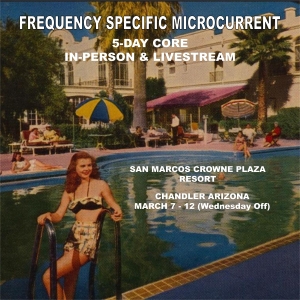 Chandler Arizona
2027 March FSM Core Arizona – In-person and Livestream
Mar 7 2027 - Mar 13 2027 -
$1,695.00 ADD TO CART This product has multiple variants. The options may be chosen on the product page
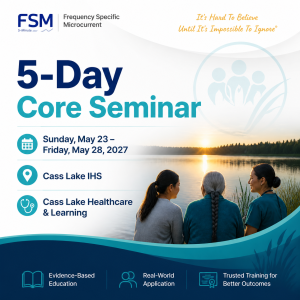 Cass Lake Minnesota
Protected: 2027 May Minnesota 5-Day Core
May 23 2027 - May 28 2027 -
$1,695.00 ADD TO CART This product has multiple variants. The options may be chosen on the product page
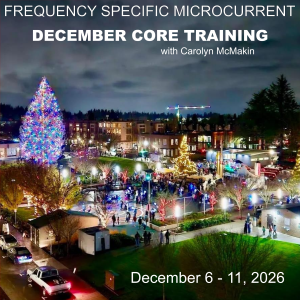 Troutdale, Oregon
December 2026 In-Person 5-Day FSM Core Training – Troutdale Oregon
Dec 6 2026 - Dec 11 2026 -
$1,695.00 ADD TO CART This product has multiple variants. The options may be chosen on the product page
 Online Course
5-Day FSM Online Course – India Only
-
$1,695.00 ADD TO CART This product has multiple variants. The options may be chosen on the product page
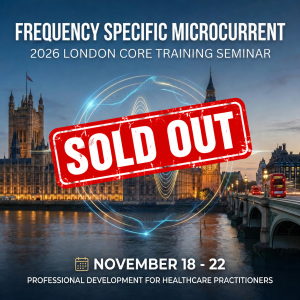 LONDON ENGLAND
2026 London FSM 5-Day Core
Nov 18 2026 - Nov 22 2026 -
$1,495.00 ADD TO CART This product has multiple variants. The options may be chosen on the product page
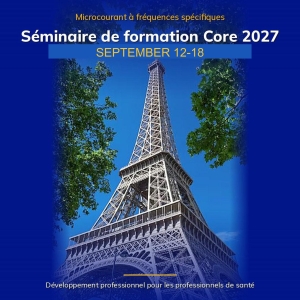 Paris, France
2027 Paris France FSM Core
Sep 12 2027 - Sep 18 2027 -
$1,495.00 ADD TO CART This product has multiple variants. The options may be chosen on the product page
 Online Course
FSM Core Deutschsprachiger Online-Kurs – Deutsche Vertonung
-
$1,495.00 ADD TO CART This product has multiple variants. The options may be chosen on the product page
 Online Course
FSM Core Online Course – Multilingual Subtitles – 2023
Not ready to register yet?
Get the free practitioner guide How to Choose Your FSM Core Training: a side-by-side breakdown of the in-person seminar, the online course, and the livestream.
Get the free guide